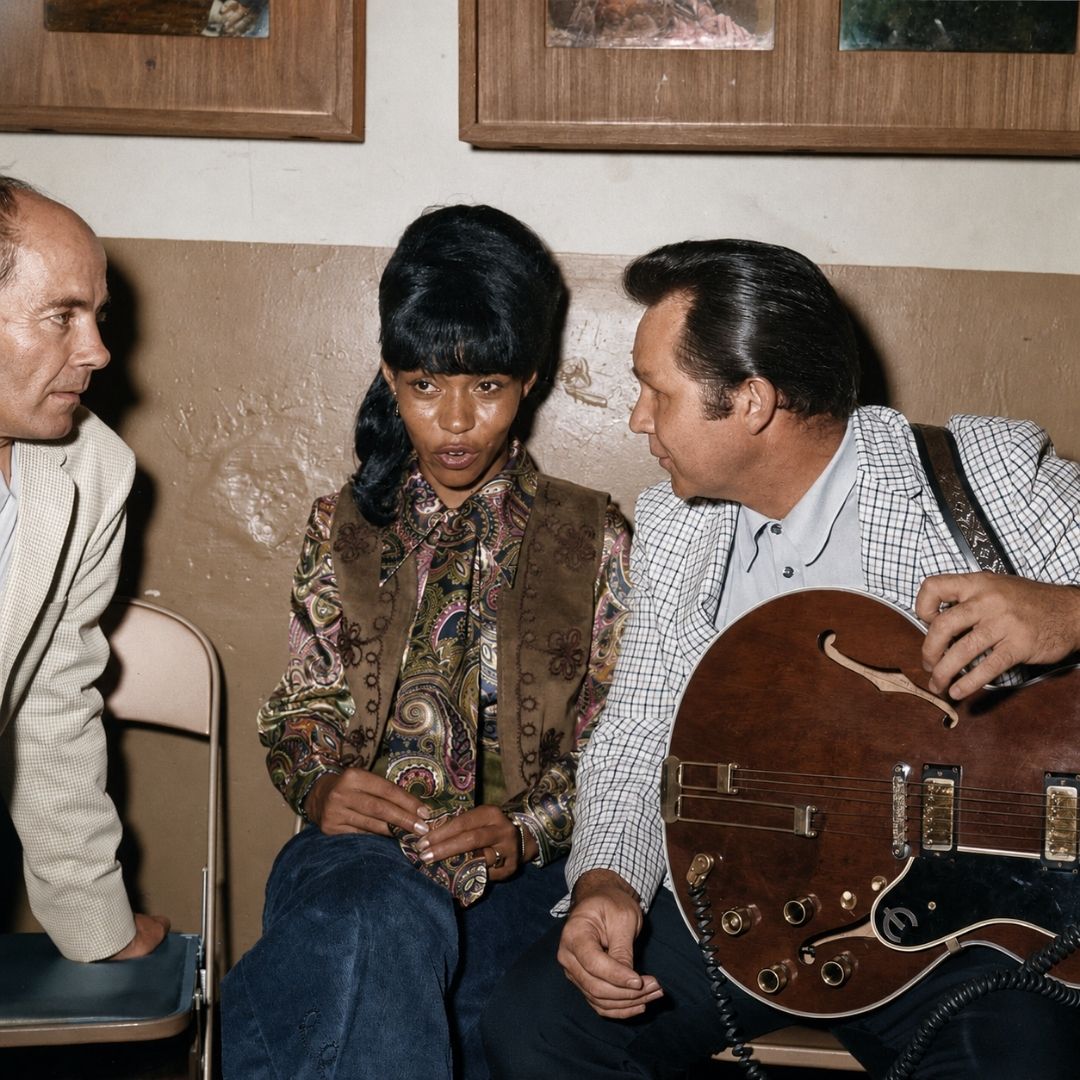
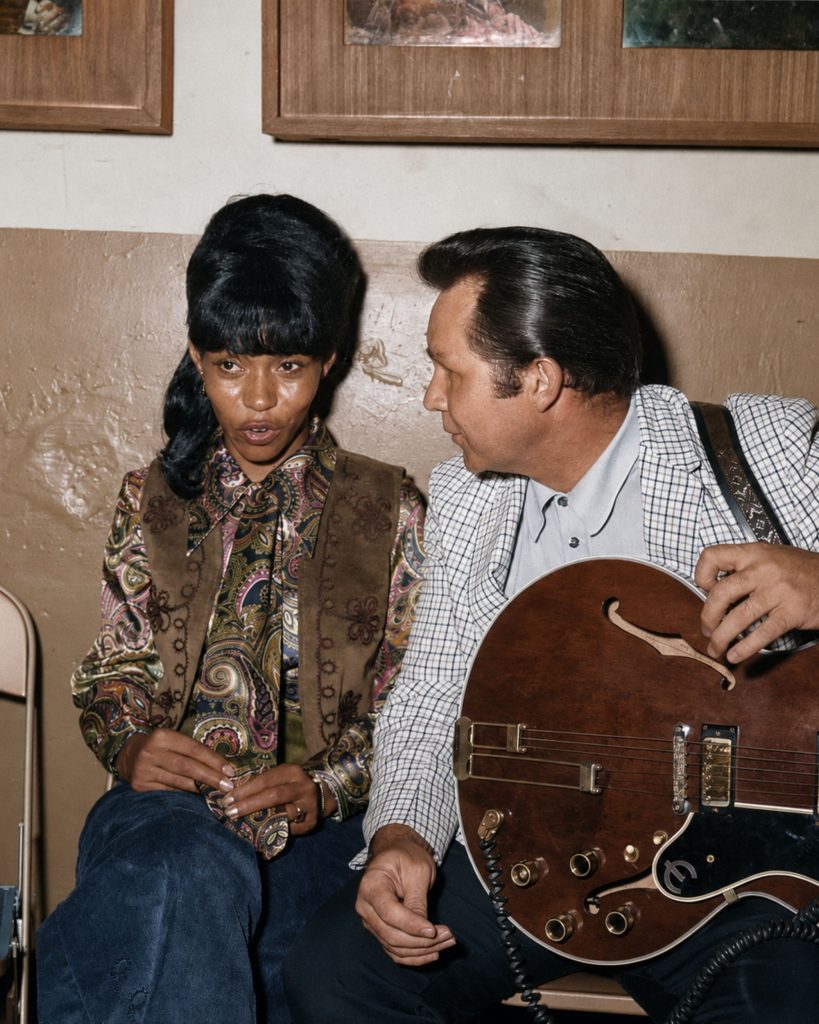
IN ONE TWELVE-HOUR NASHVILLE SESSION, LINDA MARTELL RECORDED ELEVEN SONGS. WEEKS LATER, SHE BECAME THE FIRST BLACK WOMAN TO SING ON THE GRAND OLE OPRY.
Before Nashville called her Linda Martell, she was Thelma Bynem from South Carolina.
She grew up singing gospel.
Later, she sang R&B in clubs around the Carolinas.
Small rooms.
Late nights.
Crowds that knew soul music better than steel guitar.
But Linda loved country songs too.
And one night, at an Air Force base, she sang them without apology.
A furniture-store owner named William Rayner heard her.
A Black woman singing country music like she had every right to be there.
Because she did.
Nashville Moved Fast
Rayner brought her to Nashville in May 1969.
On May 15, she signed a management agreement.
The next day, Shelby Singleton signed her to Plantation Records.
Then they put her in the studio.
There was no long development period.
No years of soft introductions.
No time for the business to decide whether it was comfortable.
Linda recorded eleven songs in one twelve-hour session.
Eleven.
In one day.
One of them was “Color Him Father,” a recent soul hit by the Winstons.
Singleton wanted her to make it country.
On the first take, he gave her a simple instruction.
Do not copy the original record.
Let them hear you.
The Record Started Moving
“Color Him Father” came out in July.
By September, it had climbed to No. 22 on the country chart.
Radio stations that had never met Linda Martell were suddenly playing her between Tammy Wynette, Lynn Anderson, and Jeannie C. Riley.
For a moment, country radio was doing something it had rarely done.
It was letting listeners hear a Black woman in the middle of the format.
Not as a novelty.
Not as a guest.
As an artist with a record climbing the chart.
Then She Walked Onto The Opry Stage
In August 1969, Linda Martell became the first Black woman to perform on the Grand Ole Opry.
She would appear there twelve times.
She sang on Hee Haw.
She released Color Me Country in 1970.
From the outside, it looked like country music had opened a door.
The singer from South Carolina had crossed from club rooms into Nashville’s most famous circle.
But some doors open only far enough to show you the room.
Not far enough to let you stay.
The Business Was Not As Open As It Looked
Linda faced racial abuse from audiences.
Resistance inside the industry.
And a label whose name carried the weight of the South she had grown up in.
The records stopped getting the support they needed.
The momentum thinned out.
By the mid-1970s, Linda had left Nashville and gone back to South Carolina.
For decades, she worked outside the music business.
The woman who had once recorded eleven songs in a single day was left carrying a country career that had been allowed to begin fast, but not allowed to grow long.
Then The Voice Came Back
In 2024, Beyoncé brought Linda Martell’s voice onto Cowboy Carter.
More than fifty years after Nashville gave her that first fast chance, millions of people heard her again.
Not as a footnote.
Not as a forgotten experiment.
As a woman whose place in country music had been real all along.
What Linda Martell Really Left Behind
The deepest part of this story is not only that Linda Martell was the first Black woman to perform on the Grand Ole Opry.
It is how much she had to do before the business decided what to do with her.
A gospel childhood.
R&B clubs.
One night at an Air Force base.
A trip to Nashville.
Eleven songs in twelve hours.
A chart hit.
Twelve Opry appearances.
Then decades of silence.
Her first country single was called “Color Him Father.”
More than fifty years later, country music finally had to remember the woman who sang it.
Linda Martell.
Video