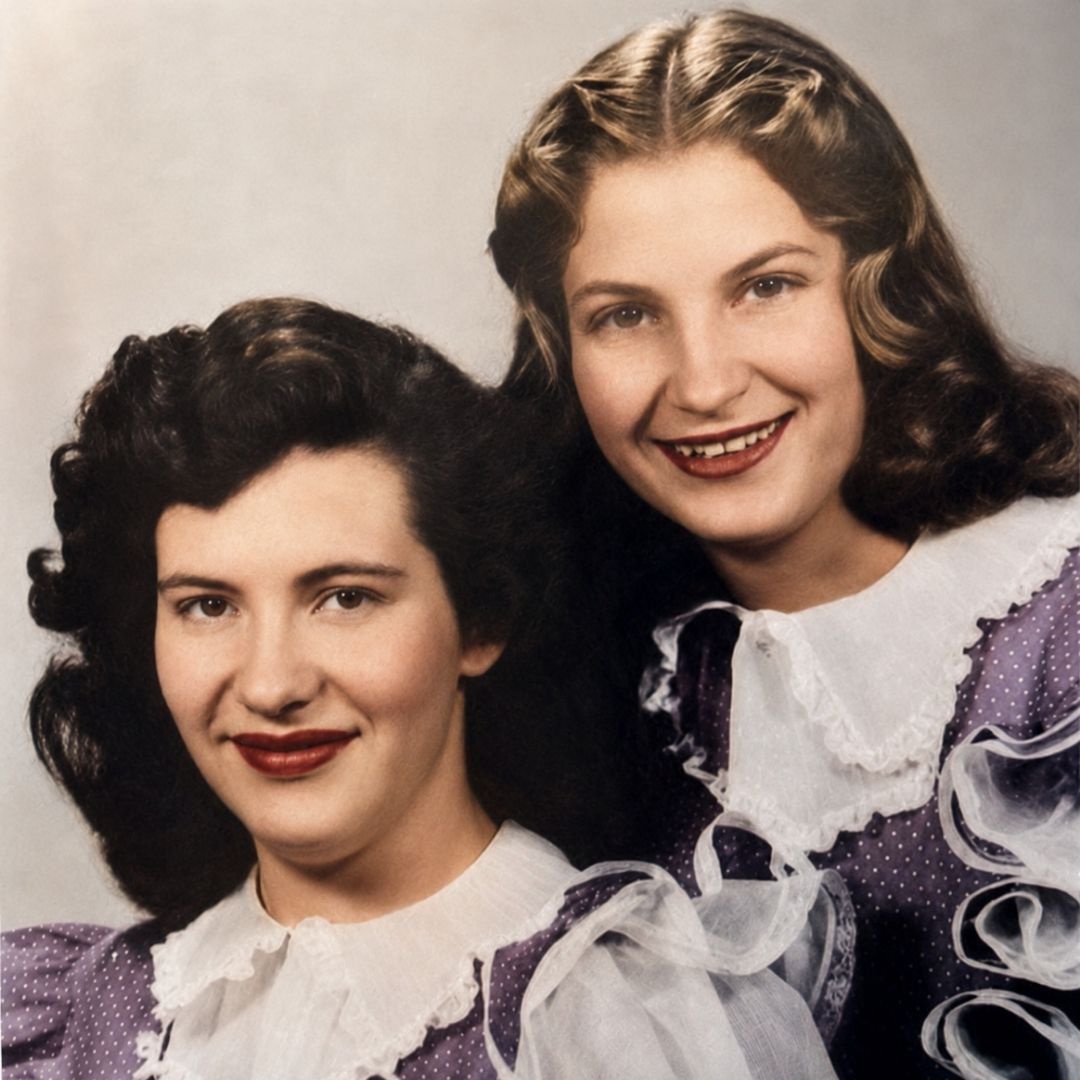
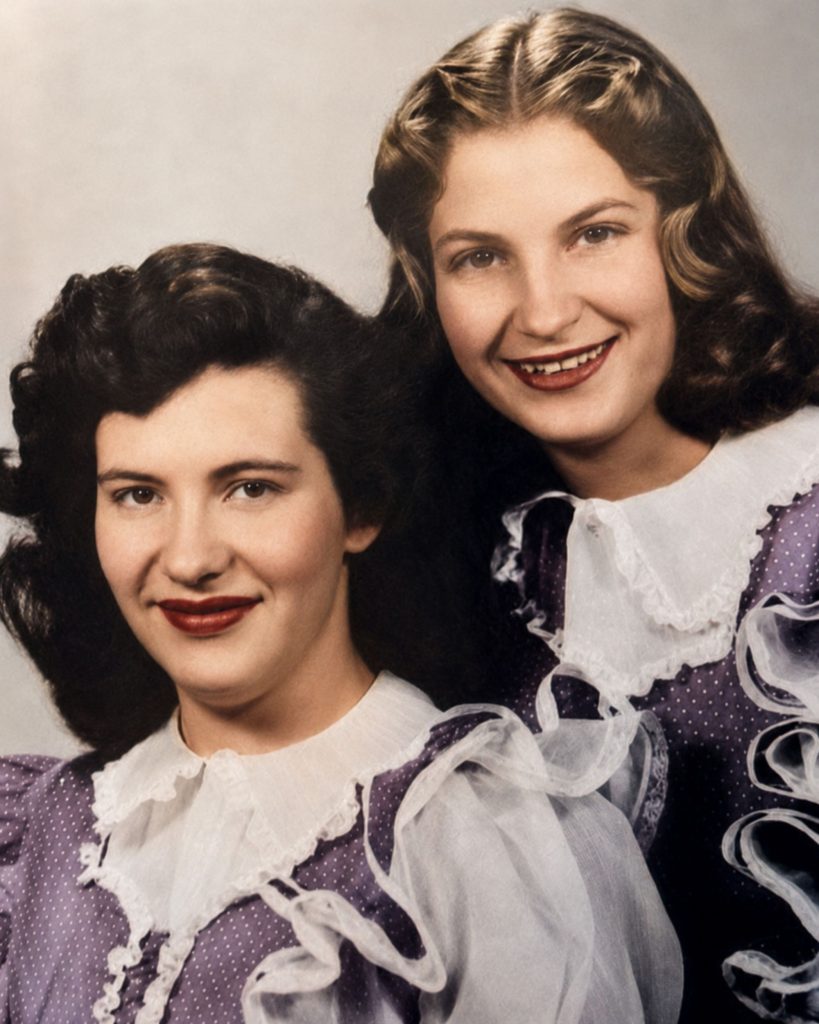
THE FIRST RECORD SKEETER DAVIS MADE WITH BETTY JACK WENT TO NO. 1. TEN WEEKS LATER, BETTY JACK WAS DEAD AND SKEETER WAS WAKING UP IN A HOSPITAL WITHOUT HER. Before Skeeter Davis became the woman who sang “The End of the World,” she was half of the Davis Sisters. Her real name was Mary Frances Penick. Betty Jack Davis was her best friend from high school in Kentucky. They were not related, but they sang together so often that Skeeter took Betty Jack’s last name and the two became sisters everywhere that mattered: on local radio, in talent contests, in Detroit clubs, and finally in the RCA Victor studio. In May 1953, they recorded “I Forgot More Than You’ll Ever Know.” The song began climbing quickly. It went to No. 1 on the country chart and crossed into pop radio. Two young women who had once sung during school lunch breaks were suddenly hearing their voices come back through jukeboxes and car radios across the country. Then, after a show in Wheeling, West Virginia, they started driving home. Near Cincinnati, in the early morning of August 2, another driver crossed into their path. The collision was head-on. Betty Jack was killed. Skeeter survived with serious head injuries. When she woke up in the hospital, the girl she had sung beside for years was gone. But the record kept climbing. “I Forgot More Than You’ll Ever Know” stayed at No. 1 for eight weeks. Radio listeners were buying the song while Skeeter was trying to recover from the crash that had ended the duo behind it. The Davis Sisters had become famous at the exact moment one of them could no longer hear the record. Six months later, Skeeter went back onstage. Beside her was Georgia Davis, Betty Jack’s younger sister. They continued as the Davis Sisters. They recorded more singles. They toured with RCA package shows. They even stood at the Grand Ole Opry for a tribute to Betty Jack. But the name was the same only on paper. Every harmony carried the space where one voice used to be. By 1956, Skeeter left the act and began again as a solo singer. Years later, she would make “The End of the World,” one of the loneliest records country music ever sent into pop radio. But before that song, Skeeter Davis had already watched a world end. She had heard a No. 1 record rise while one half of the harmony was gone.

“Scroll down to the end of the article to listen to music.”

THE FIRST RECORD SKEETER DAVIS MADE WITH BETTY JACK WENT TO NO. 1. TEN WEEKS LATER, BETTY JACK WAS DEAD AND SKEETER WAS WAKING UP IN A HOSPITAL WITHOUT HER.

Before Skeeter Davis became the woman who sang “The End of the World,” she was half of the Davis Sisters.

Her real name was Mary Frances Penick.

Betty Jack Davis was her best friend from high school in Kentucky.

They were not related.

But they sang together so often that Skeeter took Betty Jack’s last name.

After that, they were sisters everywhere that mattered.

On local radio.

At talent contests.

In Detroit clubs.

And eventually inside an RCA Victor studio.

Their First Record Changed Everything

In May 1953, the Davis Sisters recorded “I Forgot More Than You’ll Ever Know.”

The song started moving quickly.

It went to No. 1 on the country chart.

It crossed into pop radio.

Two young women who had once sung together during school lunch breaks were suddenly hearing their voices come back through jukeboxes and car radios across the country.

The dream had finally found them.

Then the road took one of them away.

The Drive Home Ended Before Morning

After a show in Wheeling, West Virginia, Skeeter and Betty Jack started driving home.

Near Cincinnati, in the early morning hours of August 2, another driver crossed into their path.

The collision was head-on.

Betty Jack was killed.

Skeeter survived with serious head injuries.

When she woke up in the hospital, the girl she had sung beside for years was gone.

The harmony had been cut in half.

And there was no way to sing the old songs without hearing what was missing.

The Record Kept Climbing

That was the cruel part.

“I Forgot More Than You’ll Ever Know” kept rising.

It stayed at No. 1 for eight weeks.

Radio listeners were buying the record while Skeeter was trying to recover from the crash that had ended the duo behind it.

The Davis Sisters had become famous at the exact moment one of them could no longer hear the song.

A hit record was playing across the country.

And one of the two voices on it was already gone.

She Went Back Before She Was Ready To Forget

Six months later, Skeeter returned to the stage.

Beside her was Georgia Davis, Betty Jack’s younger sister.

They continued as the Davis Sisters.

They made more records.

They toured RCA package shows.

They stood at the Grand Ole Opry for a tribute to Betty Jack.

But the name was the same only on paper.

Every harmony carried an empty space.

Every familiar song brought back the person who had helped make it possible.

Then Skeeter Had To Become One Voice

By 1956, Skeeter left the act and began again as a solo singer.

Years later, she would record “The End of the World,” one of the loneliest songs country music ever sent into pop radio.

People heard grief in that voice.

They heard loneliness.

They heard someone trying to stay composed while the whole room had quietly changed around her.

But Skeeter had known that feeling long before the record.

What “The End Of The World” Had Behind It

The deepest part of this story is not only that Skeeter Davis became a solo star after tragedy.

It is what came first.

Two girls singing together in Kentucky.

A first record.

A No. 1 hit.

A road home from a show.

A hospital room.

And a young woman waking up without the friend whose last name she had chosen to carry.

Before Skeeter Davis sang about the end of the world, she had already watched one happen.

She heard a No. 1 record rise.

And one half of the harmony was gone.

Video

Related Post

IN 1984, BARBARA MANDRELL SURVIVED A CRASH THAT LEFT HER BODY BROKEN. THE WOMAN WHO HAD ALREADY LOST HER VOICE ONCE HAD TO FIND HER WAY BACK AGAIN. By 1984, Barbara Mandrell had already spent years making country music look effortless. She had been a teenage steel-guitar player in her family band. She had become one of Nashville’s biggest stars, won CMA Entertainer of the Year twice, and carried Barbara Mandrell and the Mandrell Sisters into millions of homes every Saturday night. But the schedule had started to cost her. Voice problems had forced her to end the television show, and she was trying to rebuild the next chapter with a Las Vegas production, a new special, and another round of work. Then, on September 11, she was driving in Tennessee with two of her children. Another car crossed into her lane. The collision was head-on. Barbara suffered a broken femur, a shattered ankle, a damaged knee, cuts, and a severe concussion. Her children survived with less serious injuries. The other driver was killed. For months, she was not thinking about records or television cameras. She was dealing with surgeries, rehabilitation, pain, memory problems, and a body that no longer trusted her to move the way it had before. But country music kept moving while Barbara was recovering. Her 1985 single “There’s No Love in Tennessee” reached the Top 10. Then came “Fast Lanes and Country Roads.” “No One Mends a Broken Heart Like You.” The songs were coming back before she could fully believe her own life was returning with them. In 1986, Barbara stepped back onto a stage at the Universal Amphitheatre in Los Angeles. Dolly Parton opened the show. The woman who had once made rhinestones, high heels, and television spotlights look easy had spent eighteen months learning how to stand, walk, and perform through pain again. She was not returning to the same body that had driven down that road in Tennessee. But she was returning. Barbara Mandrell did not come back because the crash had stopped hurting. She came back while her body was still teaching her how to live with what it had taken.

IN SEPTEMBER 1973, GRAM PARSONS DIED BEFORE EMMYLOU HARRIS HAD MADE A HIT RECORD OF HER OWN. TWO YEARS LATER, SHE WALKED BACK INTO A STUDIO WITH THE SONG SHE WROTE FOR HIM. Before Gram Parsons, Emmylou Harris was trying to keep music alive around Washington, D.C. She had made one small album. The label folded. Her marriage had ended. She had a young daughter and took whatever work she could find between club dates, trying to keep the rent paid while holding on to the idea that singing might still lead somewhere. Then Gram heard her. He was building a sound out of country, folk, gospel, and rock, but he needed a voice beside his that could carry the old songs without making them sound old. He brought Emmylou to Los Angeles. She sang on GP. She joined him on the road with the Fallen Angels. For the first time, she was standing inside country music not as a visitor, but as someone being shown where the deepest songs lived. Gram played her records by the Louvin Brothers, George Jones, and Buck Owens. He showed her that country music did not need to explain pain to make people feel it. A line could be simple. A harmony could be soft. But the hurt could still stay in the room long after the song ended. In September 1973, Gram Parsons died. Emmylou was twenty-six. Their second album, Grievous Angel, had not even been released. The man who had opened the door for her was gone before she had built a place of her own on the other side of it. She could have disappeared into that story. Instead, she went back to work. In 1975, Emmylou released Pieces of the Sky. She formed the Hot Band. She began gathering songs from old country writers, new songwriters, gospel singers, rock records, and the people Nashville had not always known what to do with. The sound was hers now. Clearer. Stronger. Still carrying the ache Gram had taught her to hear, but no longer living in his shadow. One of the songs on that record was “Boulder to Birmingham.” She wrote it after he died. It was not a tribute built for a stage. It was a woman trying to sing into the empty space left by the person who had changed the direction of her life.

JIMMIE RODGERS WAS TOO WEAK TO STAND THROUGH THE SESSION. SO THEY PUT A COT IN THE STUDIO AND LET THE FATHER OF COUNTRY MUSIC LIE DOWN BETWEEN SONGS. By 1933, Jimmie Rodgers had already changed American music. He had come out of Meridian, Mississippi, carrying railroad stories, blues phrasing, yodels, and the sound of a man who knew what it meant to wait for a train that might not come. “Blue Yodel No. 1.” “T for Texas.” “Waiting for a Train.” The records made him one of the first national stars in country music. He was the Singing Brakeman, the man in the railroad cap, the voice that taught a generation of singers they did not have to sound polished to sound true. But tuberculosis had been working on him for years. By the spring of 1933, the disease had cut deep. He could no longer tour the way he had. He had collapsed before. He had canceled dates. Doctors told him to rest, but Jimmie Rodgers understood something else too: records were still the only way he could leave money for his family. So he went to New York for one more Victor session. The studio at 24th Street was not set up for a dying man. It was built for singers who can walk in, cut a side, shake hands, and move on to the next appointment. Rodgers couldn’t do that anymore. He sat in a chair with pillows behind him, leaning toward the microphone. Between songs, the coughing came. The exhaustion came. A nurse stayed close. Then they brought in a cot. On May 24, 1933, Jimmie Rodgers recorded four more songs. After each take, he lay down and tried to gather enough breath to stand again. One of those recordings was “Years Ago,” a song that sounded almost too quiet for the man who had once yodeled across America. Two days later, he died. He was thirty-five years old. The records outlived the body that made them. Gene Autry listened. Ernest Tubb listened. Hank Williams listened. So did Merle Haggard, Lefty Frizzell, Johnny Cash, and nearly every country singer who later tried to put railroad dust, loneliness, illness, work, hunger, or a broken heart into three minutes of sound. But the last image is still the hardest one. The Father of Country Music lying on a cot in a New York studio, waiting for enough air to sing one more song.

You Missed

THE FIRST RECORD SKEETER DAVIS MADE WITH BETTY JACK WENT TO NO. 1. TEN WEEKS LATER, BETTY JACK WAS DEAD AND SKEETER WAS WAKING UP IN A HOSPITAL WITHOUT HER. Before Skeeter Davis became the woman who sang “The End of the World,” she was half of the Davis Sisters. Her real name was Mary Frances Penick. Betty Jack Davis was her best friend from high school in Kentucky. They were not related, but they sang together so often that Skeeter took Betty Jack’s last name and the two became sisters everywhere that mattered: on local radio, in talent contests, in Detroit clubs, and finally in the RCA Victor studio. In May 1953, they recorded “I Forgot More Than You’ll Ever Know.” The song began climbing quickly. It went to No. 1 on the country chart and crossed into pop radio. Two young women who had once sung during school lunch breaks were suddenly hearing their voices come back through jukeboxes and car radios across the country. Then, after a show in Wheeling, West Virginia, they started driving home. Near Cincinnati, in the early morning of August 2, another driver crossed into their path. The collision was head-on. Betty Jack was killed. Skeeter survived with serious head injuries. When she woke up in the hospital, the girl she had sung beside for years was gone. But the record kept climbing. “I Forgot More Than You’ll Ever Know” stayed at No. 1 for eight weeks. Radio listeners were buying the song while Skeeter was trying to recover from the crash that had ended the duo behind it. The Davis Sisters had become famous at the exact moment one of them could no longer hear the record. Six months later, Skeeter went back onstage. Beside her was Georgia Davis, Betty Jack’s younger sister. They continued as the Davis Sisters. They recorded more singles. They toured with RCA package shows. They even stood at the Grand Ole Opry for a tribute to Betty Jack. But the name was the same only on paper. Every harmony carried the space where one voice used to be. By 1956, Skeeter left the act and began again as a solo singer. Years later, she would make “The End of the World,” one of the loneliest records country music ever sent into pop radio. But before that song, Skeeter Davis had already watched a world end. She had heard a No. 1 record rise while one half of the harmony was gone.

IN 1984, BARBARA MANDRELL SURVIVED A CRASH THAT LEFT HER BODY BROKEN. THE WOMAN WHO HAD ALREADY LOST HER VOICE ONCE HAD TO FIND HER WAY BACK AGAIN. By 1984, Barbara Mandrell had already spent years making country music look effortless. She had been a teenage steel-guitar player in her family band. She had become one of Nashville’s biggest stars, won CMA Entertainer of the Year twice, and carried Barbara Mandrell and the Mandrell Sisters into millions of homes every Saturday night. But the schedule had started to cost her. Voice problems had forced her to end the television show, and she was trying to rebuild the next chapter with a Las Vegas production, a new special, and another round of work. Then, on September 11, she was driving in Tennessee with two of her children. Another car crossed into her lane. The collision was head-on. Barbara suffered a broken femur, a shattered ankle, a damaged knee, cuts, and a severe concussion. Her children survived with less serious injuries. The other driver was killed. For months, she was not thinking about records or television cameras. She was dealing with surgeries, rehabilitation, pain, memory problems, and a body that no longer trusted her to move the way it had before. But country music kept moving while Barbara was recovering. Her 1985 single “There’s No Love in Tennessee” reached the Top 10. Then came “Fast Lanes and Country Roads.” “No One Mends a Broken Heart Like You.” The songs were coming back before she could fully believe her own life was returning with them. In 1986, Barbara stepped back onto a stage at the Universal Amphitheatre in Los Angeles. Dolly Parton opened the show. The woman who had once made rhinestones, high heels, and television spotlights look easy had spent eighteen months learning how to stand, walk, and perform through pain again. She was not returning to the same body that had driven down that road in Tennessee. But she was returning. Barbara Mandrell did not come back because the crash had stopped hurting. She came back while her body was still teaching her how to live with what it had taken.

IN SEPTEMBER 1973, GRAM PARSONS DIED BEFORE EMMYLOU HARRIS HAD MADE A HIT RECORD OF HER OWN. TWO YEARS LATER, SHE WALKED BACK INTO A STUDIO WITH THE SONG SHE WROTE FOR HIM. Before Gram Parsons, Emmylou Harris was trying to keep music alive around Washington, D.C. She had made one small album. The label folded. Her marriage had ended. She had a young daughter and took whatever work she could find between club dates, trying to keep the rent paid while holding on to the idea that singing might still lead somewhere. Then Gram heard her. He was building a sound out of country, folk, gospel, and rock, but he needed a voice beside his that could carry the old songs without making them sound old. He brought Emmylou to Los Angeles. She sang on GP. She joined him on the road with the Fallen Angels. For the first time, she was standing inside country music not as a visitor, but as someone being shown where the deepest songs lived. Gram played her records by the Louvin Brothers, George Jones, and Buck Owens. He showed her that country music did not need to explain pain to make people feel it. A line could be simple. A harmony could be soft. But the hurt could still stay in the room long after the song ended. In September 1973, Gram Parsons died. Emmylou was twenty-six. Their second album, Grievous Angel, had not even been released. The man who had opened the door for her was gone before she had built a place of her own on the other side of it. She could have disappeared into that story. Instead, she went back to work. In 1975, Emmylou released Pieces of the Sky. She formed the Hot Band. She began gathering songs from old country writers, new songwriters, gospel singers, rock records, and the people Nashville had not always known what to do with. The sound was hers now. Clearer. Stronger. Still carrying the ache Gram had taught her to hear, but no longer living in his shadow. One of the songs on that record was “Boulder to Birmingham.” She wrote it after he died. It was not a tribute built for a stage. It was a woman trying to sing into the empty space left by the person who had changed the direction of her life.

JIMMIE RODGERS WAS TOO WEAK TO STAND THROUGH THE SESSION. SO THEY PUT A COT IN THE STUDIO AND LET THE FATHER OF COUNTRY MUSIC LIE DOWN BETWEEN SONGS. By 1933, Jimmie Rodgers had already changed American music. He had come out of Meridian, Mississippi, carrying railroad stories, blues phrasing, yodels, and the sound of a man who knew what it meant to wait for a train that might not come. “Blue Yodel No. 1.” “T for Texas.” “Waiting for a Train.” The records made him one of the first national stars in country music. He was the Singing Brakeman, the man in the railroad cap, the voice that taught a generation of singers they did not have to sound polished to sound true. But tuberculosis had been working on him for years. By the spring of 1933, the disease had cut deep. He could no longer tour the way he had. He had collapsed before. He had canceled dates. Doctors told him to rest, but Jimmie Rodgers understood something else too: records were still the only way he could leave money for his family. So he went to New York for one more Victor session. The studio at 24th Street was not set up for a dying man. It was built for singers who can walk in, cut a side, shake hands, and move on to the next appointment. Rodgers couldn’t do that anymore. He sat in a chair with pillows behind him, leaning toward the microphone. Between songs, the coughing came. The exhaustion came. A nurse stayed close. Then they brought in a cot. On May 24, 1933, Jimmie Rodgers recorded four more songs. After each take, he lay down and tried to gather enough breath to stand again. One of those recordings was “Years Ago,” a song that sounded almost too quiet for the man who had once yodeled across America. Two days later, he died. He was thirty-five years old. The records outlived the body that made them. Gene Autry listened. Ernest Tubb listened. Hank Williams listened. So did Merle Haggard, Lefty Frizzell, Johnny Cash, and nearly every country singer who later tried to put railroad dust, loneliness, illness, work, hunger, or a broken heart into three minutes of sound. But the last image is still the hardest one. The Father of Country Music lying on a cot in a New York studio, waiting for enough air to sing one more song.