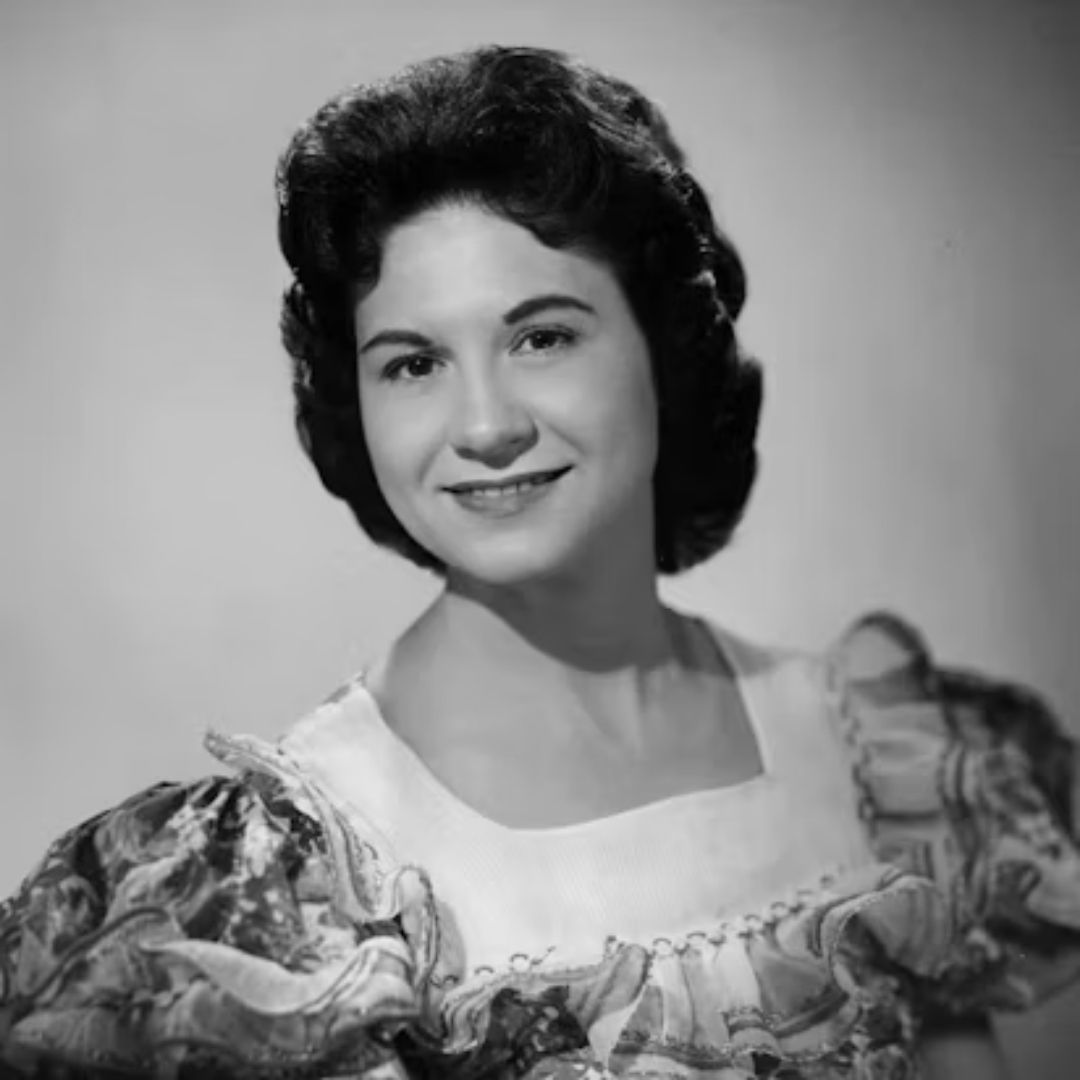
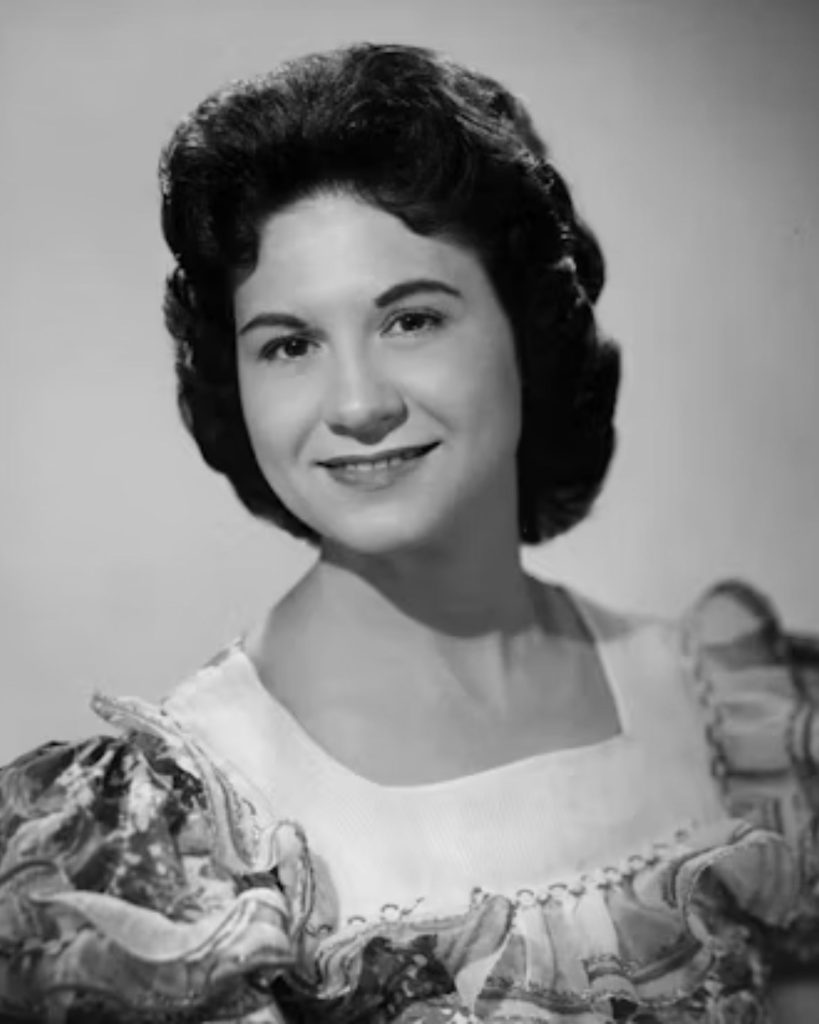
THE SONG BLAMED WOMEN FOR HONKY-TONK SIN — THEN KITTY WELLS ANSWERED IT AND COUNTRY MUSIC HAD TO MAKE ROOM FOR A WOMAN.
Some revolutions do not sound loud at first.
Kitty Wells did not storm into country music with a speech.
She stood at a microphone and sang the answer the men had not written for themselves.
Before she became the Queen of Country Music, she was Muriel Deason from Nashville — a wife, a mother, and a working singer who had already spent years on the road with her husband, Johnnie Wright.
She was not a polished young industry project.
By 1952, she was 33 years old, with children at home and plenty of road behind her.
Country Music Was Still Mostly A Man’s Room
That was the world she walked into.
Men were on the radio.
Men were high on the charts.
Men were telling the stories from their side of the bar.
A woman could sing, but she was often expected to stay inside the lines men had drawn for her — sweet, wounded, loyal, sorry, or silent.
Then Hank Thompson had a huge hit with “The Wild Side of Life.”
And one line landed like judgment.
He “didn’t know God made honky-tonk angels.”
The Blame Sat Neatly On Her Shoulders
That lyric did what country songs had done many times before.
The man was hurt.
The woman had fallen.
The honky-tonk was full of temptation.
And somehow, the blame sat mostly on her.
It was familiar enough that people accepted it without much trouble. A good man wronged. A woman gone bad. A jukebox full of sorrow, but only one side of the story.
Then J.D. “Jay” Miller wrote the answer.
And Kitty Wells became the voice that carried it.
She Cut The Answer For A Session Fee
On May 3, 1952, Kitty Wells went into Castle Studio in Nashville and recorded “It Wasn’t God Who Made Honky Tonk Angels” for Decca.
She was not walking in like someone who knew she was about to change country music.
The old story says she mainly wanted the session fee.
That almost makes it stronger.
Because history did not arrive dressed like history.
It arrived as a working singer taking a song and doing the job.
The Melody Felt Familiar — The Message Did Not
The tune was familiar.
But the answer was not.
This time, the woman spoke back.
The song did not pretend heartbreak was innocent. It did not say women never failed, never wandered, never broke a heart.
It simply asked country music to stop pretending men had no part in the wreckage.
For every woman called a honky-tonk angel, there was a man who helped lead her there.
For every woman judged from the outside, there was a private story nobody had bothered to hear.
Some Doors Tried To Stay Closed
Not everyone welcomed it.
Some radio stations resisted it.
The Grand Ole Opry was cautious.
A woman singing plainly about male hypocrisy was not the safest thing to put in front of country audiences in 1952.
But listeners heard it anyway.
And once they heard it, they knew exactly what it was.
Not just a reply record.
A correction.
Then It Went To No. 1
“It Wasn’t God Who Made Honky Tonk Angels” went to No. 1 on the country chart.
That was not just a hit.
It was a first.
Kitty Wells became the first solo female artist to top Billboard’s country chart, and the door she opened did not close behind her.
After that came more songs.
“Making Believe.”
“Searching.”
“I Can’t Stop Loving You.”
Duets.
Tours.
A long career built on a voice that did not have to shout to sound firm.
What Kitty Wells Really Leaves Behind
The deepest part of this story is not only that Kitty Wells had a No. 1 record.
It is that she changed who was allowed to answer.
A Nashville mother.
A working road singer.
A male hit that blamed women.
An answer song cut for Decca.
Radio resistance.
A No. 1 that country music could not ignore.
And a line of women who came later — Loretta Lynn, Tammy Wynette, Dolly Parton, and many more — walking through space Kitty Wells helped force open.
She did not need to raise her voice.
She only had to sing the truth from the woman’s side of the honky-tonk.
Video