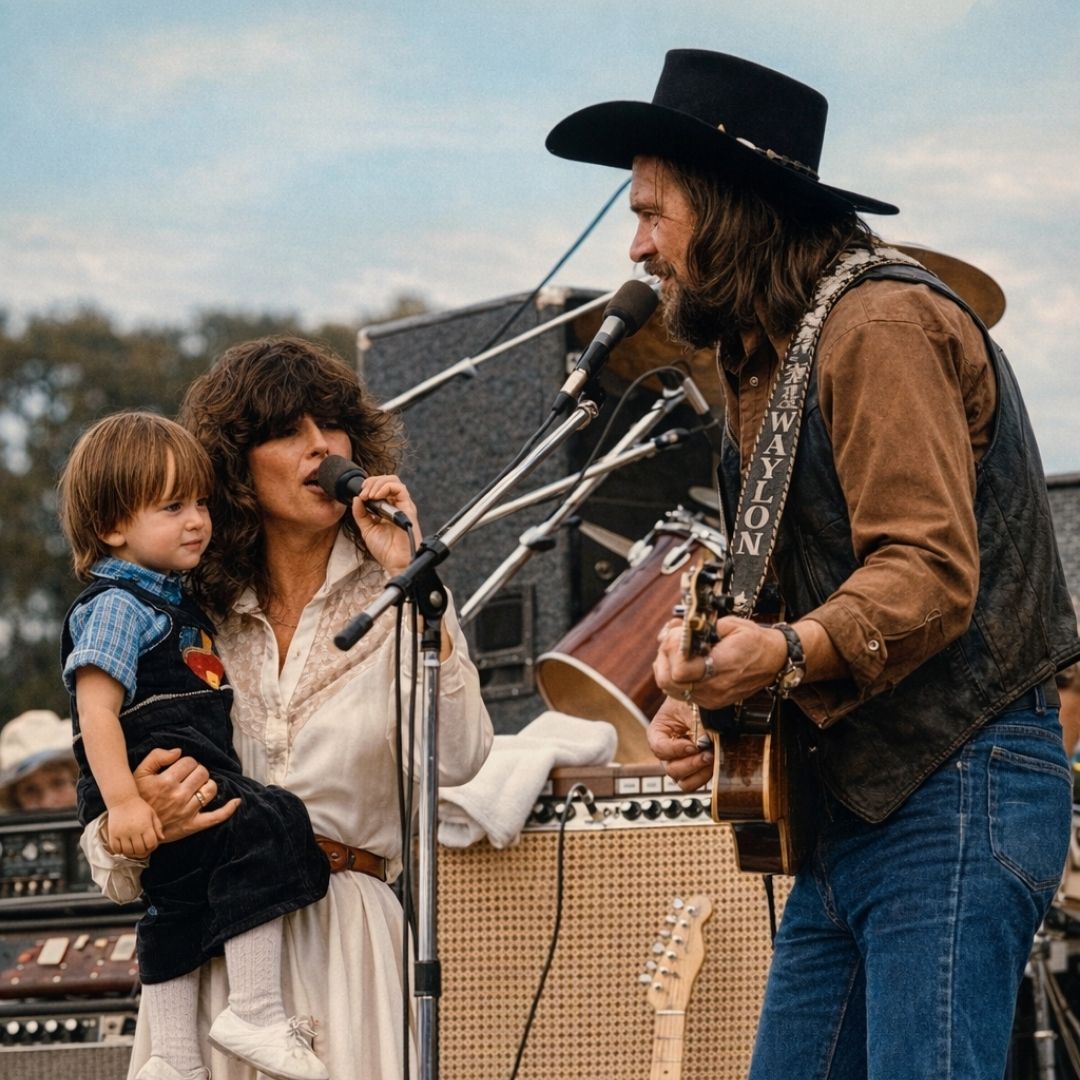
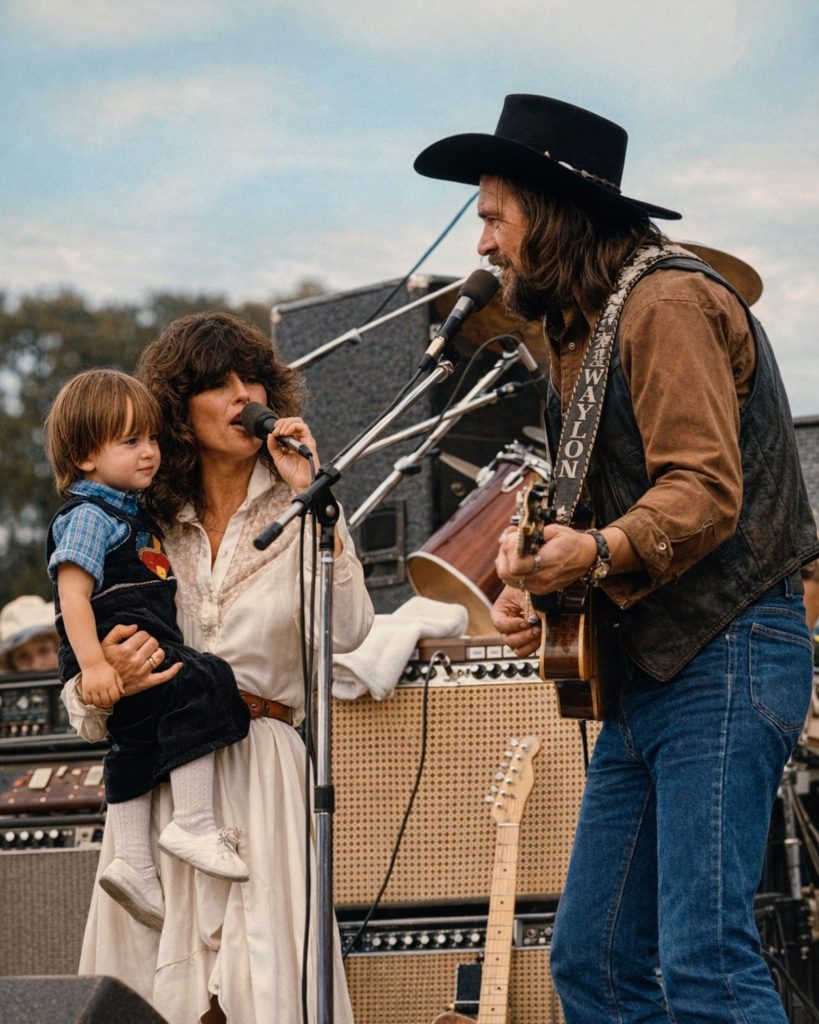
By The Time Jessi Colter Wrote “Storms Never Last,” Waylon Jennings Had Already Reached A Dangerous Edge
When Jessi Colter came into Waylon Jennings’ life, he was not some half-troubled romantic waiting to be saved.
By his own later account, he was at one of the lowest points he had ever known — down to 138 pounds and, as he put it, bent on self-destruction. He had already burned through earlier marriages, and the damage was no longer hidden behind myth or outlaw glamour. It was visible in the life itself.
She Did Not Walk In After The Storm Had Passed
That is what gives the story its weight.
Jessi was a preacher’s daughter from Phoenix, and when she married Waylon in 1969, she was stepping into a man who was already carrying ruin in plain sight, not some cleaned-up version of him. Later retellings often make their love sound smooth because the ending is so moving. But the beginning mattered more than that. She was there before the healing looked certain.
The Song She Gave Him Sounded Like Hope Refusing To Leave
The song tied most powerfully to that version of their story is “Storms Never Last.”
It was written by Jessi Colter, recorded by her earlier in the 1970s, and later became one of the signature duets she and Waylon carried together, including on Leather and Lace. The title alone tells you why it fits them so well: not as a fairy tale, but as a promise that darkness is not final.
What They Built Lasted Because It Survived Real Damage
That is why Kris Kristofferson’s description stays with people.
He called their marriage “a beautiful love affair,” and even Jessi herself agreed with that description in later interviews. But what makes the phrase meaningful is not romance by itself. It is that she stayed through addiction, collapse, and the long private stretches that break couples who do not have enough left to stand on.
The Last Time They Sang It, The Room Heard More Than A Duet
By January 2000, when Waylon and Jessi performed “Storms Never Last” live at the Ryman, the song was carrying decades of history inside it.
At that point it no longer sounded like a pretty promise written in the abstract. It sounded like two people who had already lived through enough to know exactly what the title meant.
What The Story Leaves Behind
So the version worth keeping is not simply that Jessi Colter wrote Waylon Jennings a beautiful song.
It is that she wrote hope into the life of a man who was already coming apart, then stayed long enough to help prove the song true. By the time they stood together and sang it years later, the room was not just hearing music. It was hearing what survived.
Video