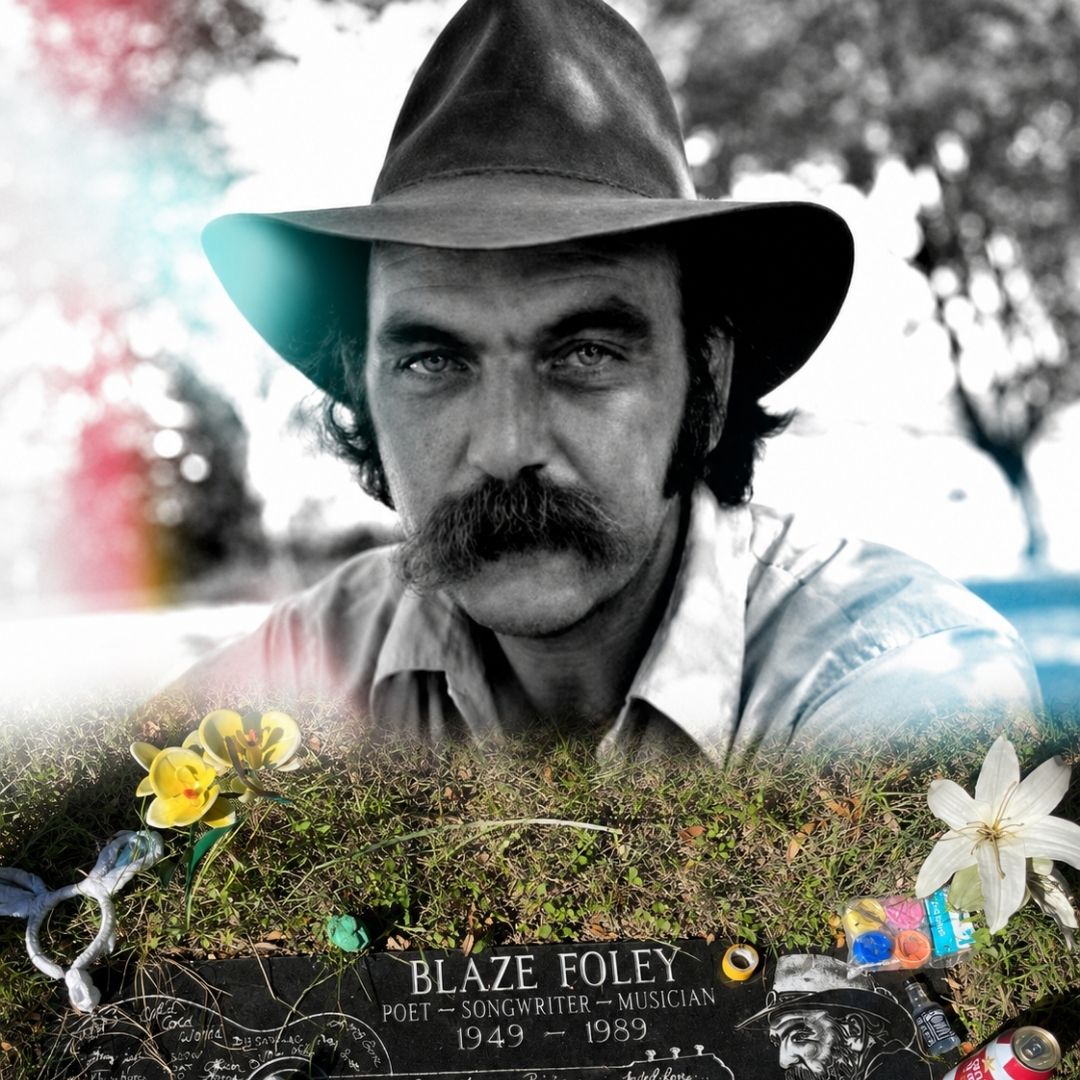
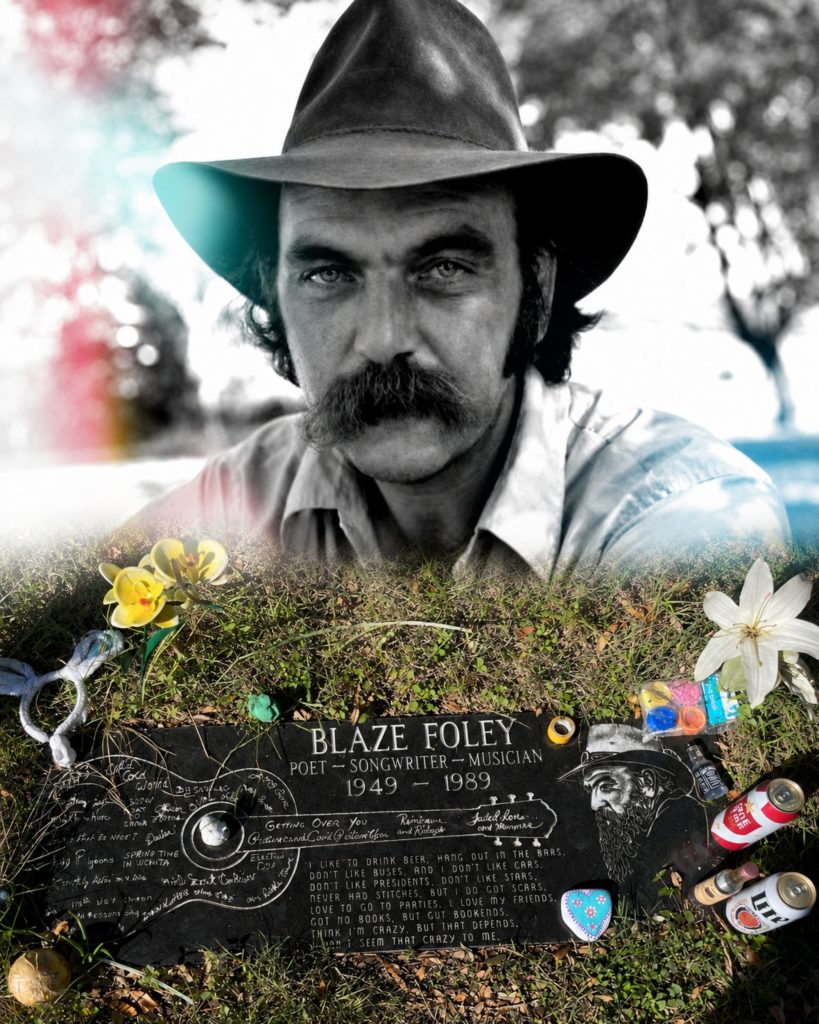
BLAZE FOLEY’S LAST FIGHT WAS NOT OVER FAME OR MONEY — IT WAS OVER AN OLD MAN’S CHECKS.
Some outlaw stories end in bars.
This one ended in a house in Austin.
By 1989, Blaze Foley was not famous in the clean way the music business understands. Nashville had not crowned him. Radio had not made him rich. He had songs other writers believed in, friends like Townes Van Zandt, duct tape on his clothes, and a voice that sounded like it had slept too many nights too close to the ground.
Austin knew him better than the industry did.
And even Austin did not know how little time he had left.
The House Belonged To An Older Friend
On February 1, 1989, Blaze was in the Bouldin Creek neighborhood of Austin.
The house belonged to Concho January, an older man Blaze cared about.
That detail matters.
This was not some glamorous outlaw scene. Not a record-label fight. Not a woman in the middle. Not a honky-tonk argument over who owed what at closing time.
It was a small house.
An old man.
A friend who thought something wrong was happening inside the family.
Blaze Believed The Checks Were Being Taken
The trouble centered on Concho’s son, Carey January.
Blaze believed Carey was stealing his father’s veteran pension and welfare checks. For a man like Blaze — broke himself, often unstable, but fiercely loyal to the forgotten — that kind of thing was not just family business.
It was cruelty.
He stepped into it.
Maybe he should not have. Maybe another man would have walked away. But Blaze Foley was never built to pass quietly by someone weaker being used.
The Argument Lost The Shape Of A Song
That is where the night turned ugly.
Arguments like that do not stay poetic. They become voices in rooms. Accusations. Fear. Pride. Old resentments. Family damage spilling into the open where nobody can make it sound noble anymore.
Then Carey January pulled a gun.
Blaze was shot in the chest.
He was 39 years old.
The man who had never had much money died after trying to protect someone else’s.
The Trial Did Not Give His Friends Peace
The case did not end the way many of Blaze’s friends expected.
Carey January said he acted in self-defense. At trial, Concho and his son gave different versions of what happened. The jury acquitted Carey of first-degree murder.
Legally, the matter moved toward an ending.
Emotionally, it did not.
For the people who loved Blaze, the verdict could not soften the fact that he was gone from a room he had entered because he thought an old man was being robbed.
Then The Myth Took Over
After the funeral, Blaze’s friends covered his coffin in duct tape.
That was the detail people remembered because it sounded like him. Strange. Tender. Ragged. A poor man’s armor turned into a final tribute.
Then came the wild Townes Van Zandt story about trying to dig up Blaze’s grave to recover a pawn ticket for a guitar.
That story grew legs.
Outlaw legends always do.
But the myth can sometimes hide the wound.
What Blaze Foley’s Last Night Really Leaves Behind
The deepest part of this story is not the duct tape coffin.
It is not the grave story.
It is not even the strange mythology that gathered around Blaze after death.
It is the reason he was in that fight at all.
An older friend.
A disputed check.
A broke songwriter stepping into someone else’s trouble because he thought it was wrong.
And somewhere inside Blaze Foley’s final night was the harsh little truth his songs had been circling for years:
Some men never get rich enough to protect themselves.
But they still try to protect somebody else.
Video