The Silence Had Already Rewritten His Life
When Randy Travis lost his voice after the 2013 stroke, the damage was not limited to singing. Reports on his recovery describe years of relearning basic functions — walking, reading, spelling, and living inside a body that no longer answered the way it once had. Aphasia reshaped his speech. The loss was physical, but it was also identity-deep. The instrument that had carried his career was no longer available to him in the form the world remembered.
That made the absence harder than ordinary silence.
A retired singer can still speak. A wounded singer can still explain what was lost. Randy’s story was crueler than that. The voice people knew was not merely aging. It had been interrupted at the source.
The Return Did Not Come Through Healing Alone
That is why the 2024 song felt so unsettling to people.
It was not a conventional comeback. Randy Travis did not simply recover enough to walk into a studio and sing the way he once had. The new recording came through AI-assisted reconstruction, built from earlier recordings of his voice. Associated Press reported that the production team used archived stems and vocal material from across his career, with one model trained on 42 stems recorded between 1985 and 2013.
That detail changes the emotional meaning of the song.
The return was real, but it came by way of preservation, engineering, and memory. It was not the old body restoring the old sound. It was the old sound being carefully brought forward into a body and a moment that could no longer produce it on their own.
Mary Had Been Waiting For A Very Specific Miracle
Mary Travis has spoken plainly about what she wanted most after the stroke: to hear Randy sing again. That wish sits at the center of the story because it was so simple and so impossible for so long. Not a chart comeback. Not a public victory. Just the sound itself.
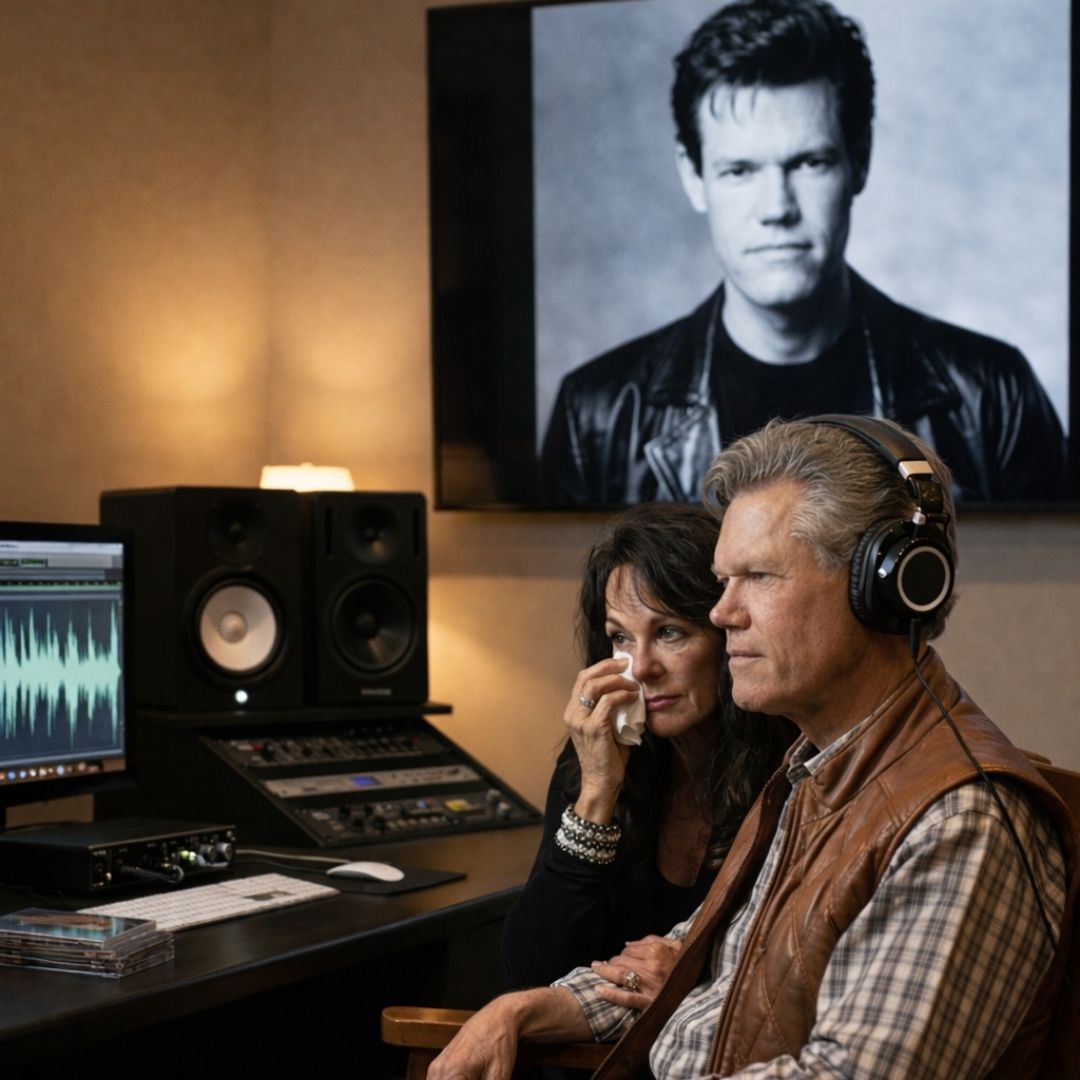
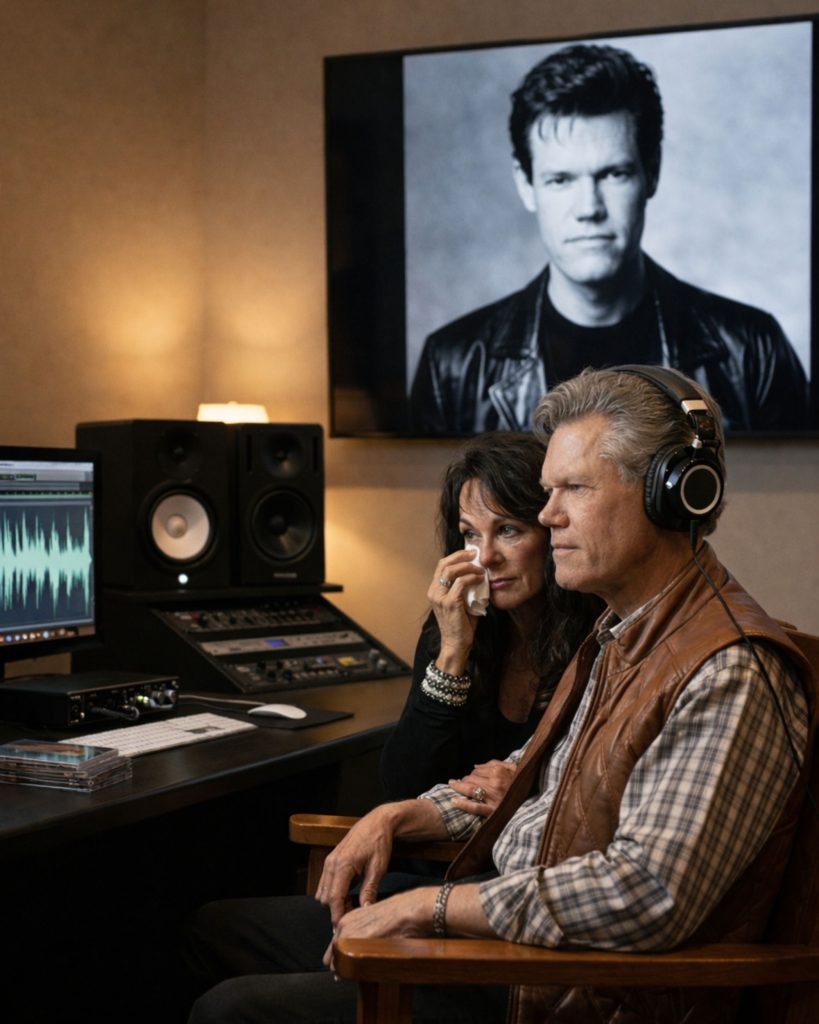
So when “Where That Came From” was finally played, the emotional weight did not come only from technology. It came from duration. Eleven years is long enough for hope to change shape. Long enough for a prayer to become almost unaskable. That is what gives the first listen its force. It was not just a reveal. It was an answered longing.
The Song Raised A Harder Question Beneath The Wonder
The miracle in this story is not simple.
A machine helped bring the voice back. That creates awe, but it also creates tension. What exactly is returning in a moment like that — the singer, the sound, the memory of the singer, or some new form made from all three? Randy and Mary themselves described the technology in grateful terms, but the emotional power of the song comes partly from that uncertainty too.
Because what people were hearing was not just a technical achievement.
They were hearing the outline of a life re-enter the room.
His Voice Had Always Meant More Than Technique
That is why this story reached beyond country music headlines.
Randy Travis was never only a technically gifted singer. His voice had a moral and emotional texture that listeners associated with steadiness, faith, heartbreak, plainspoken devotion, and a kind of unfussy sincerity. When that voice disappeared, fans did not just lose future records. They lost a familiar emotional place. His official bio still frames him as one of the central voices in country, with more than 25 million records sold and a career that reshaped the sound of the genre.
So when the voice returned in 2024, the reaction was bigger than curiosity about AI.
For many listeners, something intimate had come back with it.
What The Story Leaves Behind
Randy Travis did not get his voice back in the old way.
That is what makes the story so moving. There was no clean recovery arc, no perfect restoration, no easy sentence about triumph over suffering. Instead, the return came through pieces saved from the years when he was whole, carried forward by people who refused to let that sound disappear entirely.
The result was stranger than a comeback and more tender than one too.
A man whose voice had once reached millions sat and listened while that same voice found its way back to him through memory, machines, and the devotion of the people who had kept believing it still mattered.