
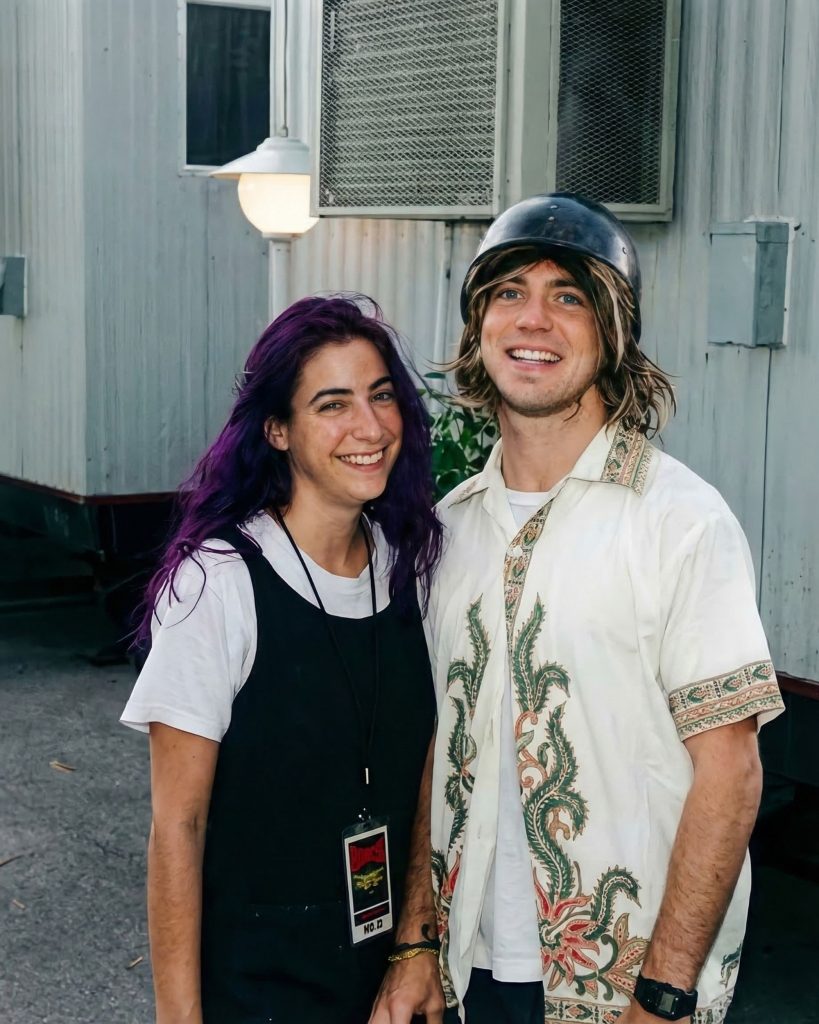
Before The Roar, He Was Still Just A Young Man Trying To Hold Himself Together
Before the world knew Eddie Vedder as the voice at the front of Ten, he was still living inside the unfinished version of himself.
San Diego came first. Small jobs. Demo tapes. Local bands. A life close to the water, close to uncertainty, and still far from anything that looked permanent. Biographical accounts place him back in San Diego in the mid-1980s with Beth Liebling, working ordinary jobs while trying to find a way into music. Sources from that period describe security work, demo recording, and a long stretch of trying on different bands before anything locked into place.
That matters because Eddie Vedder did not arrive as a finished myth.
He looked much more like what so many future legends look like before the world names them correctly: talented, restless, hard to place, and still carrying more feeling than direction.
Beth Liebling Belonged To The Life Before The Spotlight Did
Beth Liebling was not someone who entered the story after the shape of fame was already visible.
She was there in the earlier San Diego years, when the career was still uncertain and the identity was still forming. Accounts of both Vedder and Liebling place them together in that scene well before Pearl Jam became Pearl Jam. Beth herself was active around San Diego State University and local music circles, and the two were part of the same pre-fame world long before the larger public ever attached meaning to either name.
That gives the story its emotional center.
Because belief looks different before success. It is easy to stand beside someone once the talent has already been ratified by the world. It means more when the world is still shrugging, when the rooms are still small, and when the person in front of you is mostly potential held together by instinct.
“Better Man” Belonged To The Earlier Eddie, Not The Famous One
One of the strongest facts in this whole chapter is that “Better Man” did not come from Pearl Jam’s peak.
It came from earlier.
Vedder has said he wrote “Better Man” before he could legally drink, and other accounts describe it as a song from his teenage years in San Diego, later performed with his pre-Pearl Jam band Bad Radio before finally appearing on Vitalogy in 1994. He also later reflected on being the teenager in San Diego writing the song and wondering whether anyone would ever hear it.
That changes the emotional shape of the story.
The song people now hear as one of Pearl Jam’s most enduring tracks was born before the giant rooms, before the myth of Eddie Vedder had fully hardened, before the culture had decided he belonged to it. It came from the quieter period, the less certain one, the version of him still writing in private without any guarantee those words would travel.
The Future Was Not Visible Yet, But The Material Already Was
That is often the truest part of an origin story.
Not that someone already looked famous.
That the raw material was already there.
By 1988, Vedder was singing with Bad Radio in San Diego, still years away from the band and the city that would make him globally known. The world had not yet heard the full roar of Ten. But the deeper elements were already in place: the intensity, the inwardness, the habit of turning private emotional pressure into lyrics that sounded larger than the room they started in.
And somewhere inside that earlier life was Beth, standing in the chapter before history began organizing itself around his name.
What The Story Leaves Behind
So the version worth keeping is not the embellished one where every detail lands like a movie scene.
The truer version is quieter and, because of that, stronger.
Before Pearl Jam changed everything, Eddie Vedder was still a young man in San Diego working ordinary jobs, singing in small rooms, writing songs nobody could yet measure, and building a life beside someone who knew him before the world did. Beth Liebling belonged to that earlier landscape. “Better Man” did too.
That is enough.
Because sometimes the most important part of a legend’s beginning is not the moment the whole world hears him.
It is the smaller stretch before that, when the songs already exist, the future does not, and one person is still standing close enough to believe anyway
Video