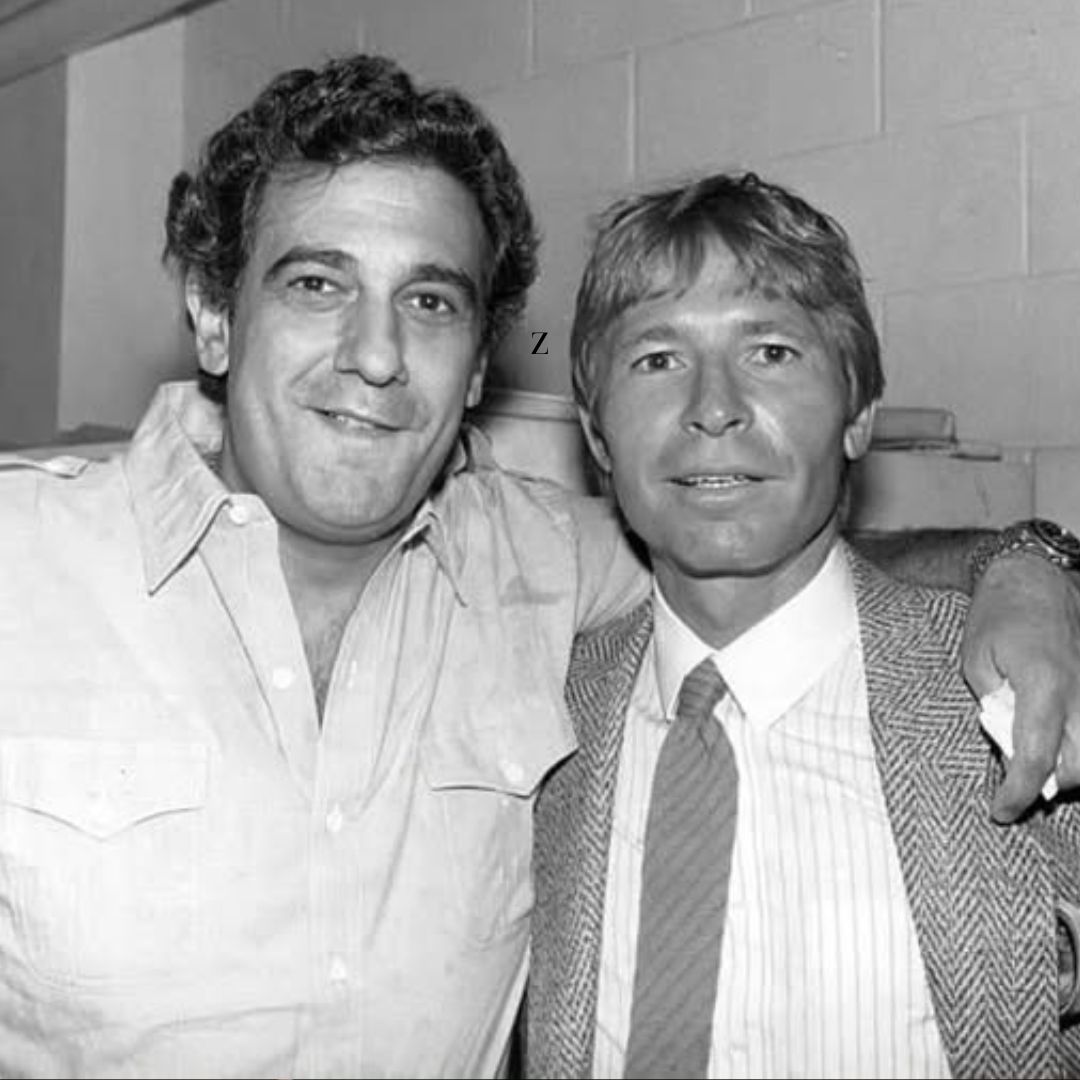
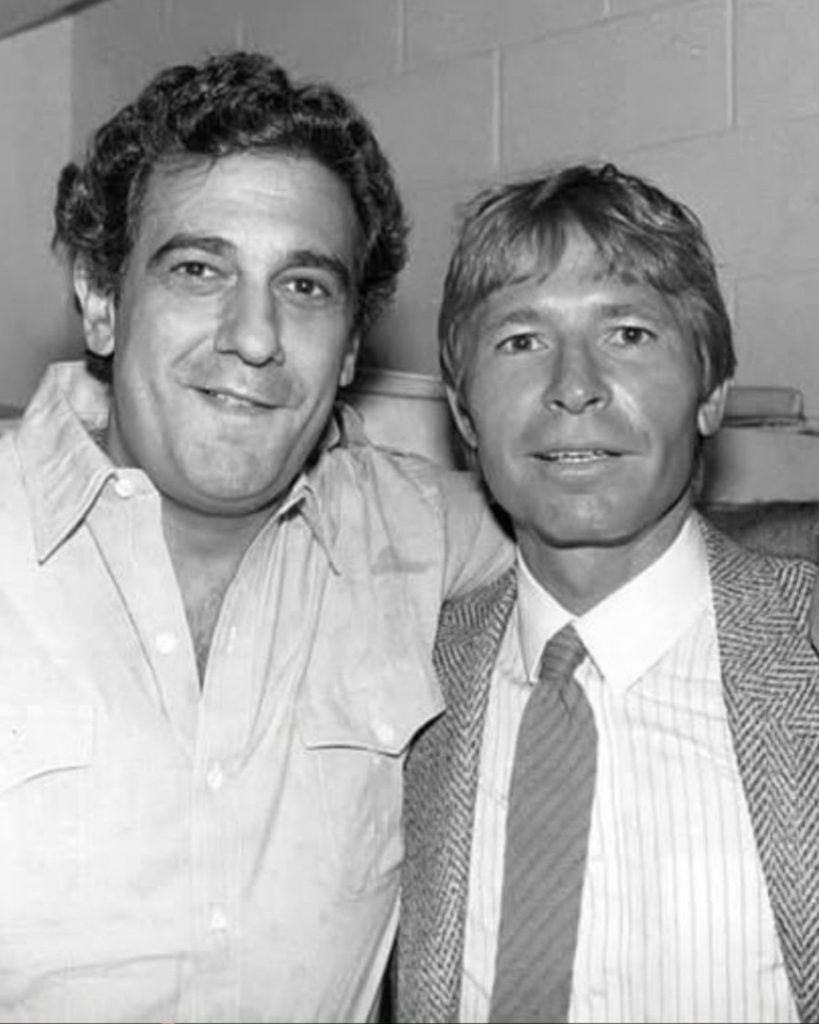
The Story Behind “Perhaps Love” – When John Denver and Plácido Domingo Bridged Worlds

In the vast universe of music, some genres seem destined never to meet. Opera—with its grand stages, centuries-old traditions, and soaring arias—appears worlds apart from country and folk, rooted in simple storytelling, acoustic guitars, and the spirit of open fields. Yet in 1981, a remarkable collaboration shattered that divide. John Denver, the beloved folk-country singer with a voice full of warmth, recorded a duet with Plácido Domingo, one of the greatest operatic tenors of the 20th century. The song was “Perhaps Love,” written by Denver himself. What could have been a clash of styles became one of the most unexpected and touching partnerships in modern music.

The Birth of a Simple, Honest Song

In 1980, John Denver was facing one of the most difficult chapters of his personal life. His marriage to Annie Martell—the inspiration behind his timeless “Annie’s Song”—was falling apart. In the midst of heartbreak and uncertainty, Denver wrote “Perhaps Love.” The ballad reflected not only his own pain but also a broader meditation on the many shades of love: its gentleness, its challenges, its fleeting beauty, and its enduring strength.

With lyrics that are disarmingly simple yet profoundly meaningful, Denver gave voice to something universal. “Perhaps love is like a resting place, a shelter from the storm. It exists to give you comfort, it is there to keep you warm.” Through this song, he transformed personal sorrow into a gift of hope and reflection for listeners everywhere.

Plácido Domingo Steps Into a New World

At that same time, Plácido Domingo was at the height of his operatic career. Known for his commanding presence and powerful interpretations of composers like Verdi and Puccini, he was celebrated around the globe. Yet Domingo was never afraid to explore beyond opera. When he encountered Denver’s song, he recognized something special. Encouraged by his label, RCA, he decided to take a bold step into crossover territory.

Pairing Denver’s soft, folk-inspired tenor with Domingo’s majestic operatic voice seemed like a gamble. Could such contrasting styles harmonize? Would the result feel authentic rather than forced? These questions set the stage for one of the most surprising musical experiments of its time.

The Recording Session – A Meeting of Equals

When the two artists came together in the studio, the atmosphere was built on mutual respect. Denver brought his guitar and intimate phrasing, while Domingo contributed his unmatched vocal power and technique. Instead of clashing, their voices blended in a way that surprised even them. Denver’s delivery carried warmth and vulnerability, while Domingo’s voice brought dignity and grandeur. The result was not simply a duet, but a dialogue—two men from different musical worlds meeting on common ground.

A Success Beyond Expectation

Released in 1981 on Domingo’s album Perhaps Love, the duet quickly became a success, selling over 2 million copies worldwide—far surpassing what opera albums typically achieved. For Denver, it proved that his straightforward songwriting could resonate far beyond country and folk audiences. For Domingo, it was validation that stepping outside of opera could be done with integrity. The song touched listeners across genres, introducing country fans to opera and opera fans to folk music.

The Meaning That Endures

At its core, “Perhaps Love” was never about mixing genres. It was about expressing something that transcends all categories—love in its many forms. Whether performed on a grand stage or sung around a campfire, the song carried a message that resonated with all. For Denver, it was a cathartic way to turn heartbreak into beauty. For Domingo, it was an opportunity to prove that music could be a bridge, not a barrier. Together, they showed that authenticity and emotion matter more than labels.

John Denver’s Personal Reflection

Despite the song’s success, Denver’s personal struggles continued. His divorce left him shaken, and the music industry often seemed to treat him as a voice of the past rather than a contemporary artist. Yet in “Perhaps Love,” he left behind a song that revealed his deeper maturity—a portrait of love not as an idealized fantasy but as something fragile, flawed, and deeply real. It remains one of his most heartfelt works.

Domingo’s Boldness in Crossing Over

For Domingo, the duet also carried risks. Purists in the opera world often dismissed crossover attempts as compromising artistic standards. But he believed music should unite rather than divide. Long before the phenomenon of The Three Tenors, “Perhaps Love” proved that blending traditions could be both respectful and moving. His decision to embrace the project helped pave the way for future collaborations that brought opera closer to mainstream audiences.

A Lasting Legacy

More than four decades later, “Perhaps Love” remains a cherished classic. It is often chosen for weddings, anniversaries, and memorials—moments where words alone are not enough. While many artists have covered it, none have captured the original magic between John Denver and Plácido Domingo. Its legacy lies not only in its beauty but in its message: that music, at its best, dissolves boundaries and reminds us of what we share.

For Denver, it was one of his most enduring triumphs. For Domingo, it was proof that courage and openness could enrich tradition. For listeners around the world, it is a timeless reminder that love, in all its complexity, is the greatest song we ever sing.

Watch the Studio Performance

Related Post

THE SONG STARTED ON A SMALL REGIONAL LABEL. THREE YEARS LATER, “BORROWED ANGEL” HAD CARRIED A WEST VIRGINIA BODY-SHOP OWNER INTO THE COUNTRY TOP 10. Before Nashville knew his name, Mel Street was fixing cars. In 1963, he moved back to West Virginia and opened an auto body shop. Days were metal, paint, grease, and customers. Nights were music. He had sung on radio as a teenager, worked as a radio tower electrician, and played clubs around Niagara Falls, but none of that had made him a country star. Then Bluefield changed the pace. From 1968 to 1972, Mel hosted a local television show in Bluefield, West Virginia. The camera gave people a reason to remember the face. The clubs gave them a reason to remember the voice. Little by little, the body-shop singer became more than a local act. That exposure led to a small label called Tandem Records. Mel went to Nashville for a session and cut “House of Pride.” On the flip side, he placed one of his own songs: “Borrowed Angel.” It did not explode at first. Regional records rarely do. But “Borrowed Angel” kept moving. It found listeners. It found stations. By 1972, Royal American Records picked it up, and the song finally broke wide enough to reach the Billboard country Top 10. The strange part is how clean the story looks from the outside. A hit song. A new voice. A career beginning. But behind it was almost a decade of body-shop work, local television, club nights, and a record that had to crawl out of West Virginia before Nashville treated it like it belonged there.

THEY OFFERED HIM $100 TO GO AWAY. BILLY JOE SHAVER SAID NO — THEN THREATENED TO FIGHT WAYLON JENNINGS UNTIL HE LISTENED TO HIS SONGS. The whole thing started in Texas. In 1972, at the Dripping Springs Reunion, Billy Joe Shaver was sitting in a songwriter circle, playing the rough little songs he had carried around like unpaid debts. Waylon Jennings was nearby, resting in a trailer, half-listening. Then he heard one. “Willy the Wandering Gypsy and Me.” Waylon asked if Billy Joe had any more of those old cowboy songs. Billy Joe said he did. Waylon told him he might record a whole album of them. Most people would have gone home smiling. Billy Joe went to Nashville. Then he waited. For months, Waylon dodged him. Billy Joe kept trying to find him. Finally, with help from a local DJ, he tracked Waylon down at an RCA session with Chet Atkins. That is where the story stopped being polite. Waylon offered him $100 to leave. Billy Joe refused. He told Waylon he would fight him right there if he did not listen to the songs he had promised to hear. Waylon finally made a deal: sing one. If he liked it, Billy Joe could sing another. If not, he had to go. Billy Joe sang. Then he sang another. Then another. In 1973, Waylon released Honky Tonk Heroes, built almost entirely from Billy Joe Shaver songs. Outlaw country did not walk into Nashville quietly. One part of it came through an RCA hallway, carried by a songwriter too broke and too stubborn to take the hundred dollars.

You Missed

THE SONG STARTED ON A SMALL REGIONAL LABEL. THREE YEARS LATER, “BORROWED ANGEL” HAD CARRIED A WEST VIRGINIA BODY-SHOP OWNER INTO THE COUNTRY TOP 10. Before Nashville knew his name, Mel Street was fixing cars. In 1963, he moved back to West Virginia and opened an auto body shop. Days were metal, paint, grease, and customers. Nights were music. He had sung on radio as a teenager, worked as a radio tower electrician, and played clubs around Niagara Falls, but none of that had made him a country star. Then Bluefield changed the pace. From 1968 to 1972, Mel hosted a local television show in Bluefield, West Virginia. The camera gave people a reason to remember the face. The clubs gave them a reason to remember the voice. Little by little, the body-shop singer became more than a local act. That exposure led to a small label called Tandem Records. Mel went to Nashville for a session and cut “House of Pride.” On the flip side, he placed one of his own songs: “Borrowed Angel.” It did not explode at first. Regional records rarely do. But “Borrowed Angel” kept moving. It found listeners. It found stations. By 1972, Royal American Records picked it up, and the song finally broke wide enough to reach the Billboard country Top 10. The strange part is how clean the story looks from the outside. A hit song. A new voice. A career beginning. But behind it was almost a decade of body-shop work, local television, club nights, and a record that had to crawl out of West Virginia before Nashville treated it like it belonged there.

THEY OFFERED HIM $100 TO GO AWAY. BILLY JOE SHAVER SAID NO — THEN THREATENED TO FIGHT WAYLON JENNINGS UNTIL HE LISTENED TO HIS SONGS. The whole thing started in Texas. In 1972, at the Dripping Springs Reunion, Billy Joe Shaver was sitting in a songwriter circle, playing the rough little songs he had carried around like unpaid debts. Waylon Jennings was nearby, resting in a trailer, half-listening. Then he heard one. “Willy the Wandering Gypsy and Me.” Waylon asked if Billy Joe had any more of those old cowboy songs. Billy Joe said he did. Waylon told him he might record a whole album of them. Most people would have gone home smiling. Billy Joe went to Nashville. Then he waited. For months, Waylon dodged him. Billy Joe kept trying to find him. Finally, with help from a local DJ, he tracked Waylon down at an RCA session with Chet Atkins. That is where the story stopped being polite. Waylon offered him $100 to leave. Billy Joe refused. He told Waylon he would fight him right there if he did not listen to the songs he had promised to hear. Waylon finally made a deal: sing one. If he liked it, Billy Joe could sing another. If not, he had to go. Billy Joe sang. Then he sang another. Then another. In 1973, Waylon released Honky Tonk Heroes, built almost entirely from Billy Joe Shaver songs. Outlaw country did not walk into Nashville quietly. One part of it came through an RCA hallway, carried by a songwriter too broke and too stubborn to take the hundred dollars.